


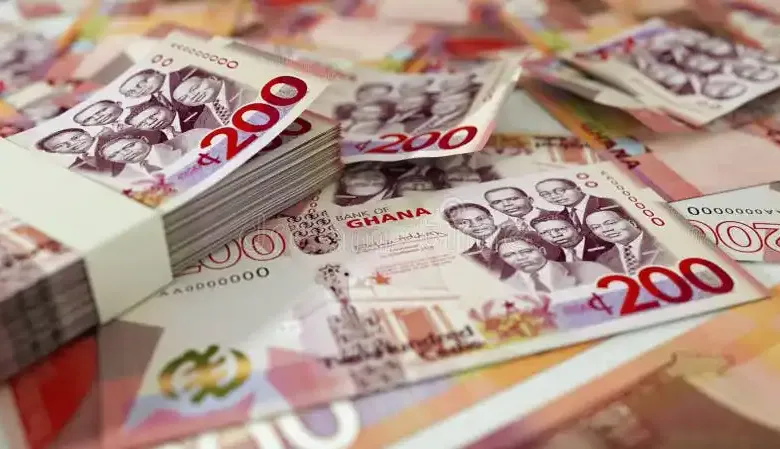
The Ghanaian local currency (cedi) has ended the 2025 fiscal year on its strongest footing in a decade, defying an at least 30-year seasonal depreciation pattern and emerging as one of the world’s top-performing currencies.
Bolstered by a surge in global gold prices, increased artisanal gold production captured into the formal economy and robust year-end diaspora inflows, the cedi has provided substantial relief to a private sector long plagued by foreign exchange volatility.
For decades, Ghana’s final quarter has been synonymous with a “forex squeeze” as importers rushed for dollars. However, 2025 marked a definitive shift, with market data revealing the local currency not only stabilised but actively reclaimed significant value against major global benchmarks.
Performance measure
The scale of the cedi’s recovery is stark when compared to the turbulent close of the previous year.
Last week, the interbank market opened with the dollar at GHȼ11.50. By the start of the final week of December, the rate had sharpened to GHȼ11.11. This stands in sharp contrast to December 2024, when the dollar traded at a staggering GHȼ14.71. A similar trend was observed against other key currencies:
Currency Mid-Dec 2025 Year-End 2025 Year-End 2024
US Dollar ($) GHȼ11.50 GHȼ11.11 GHȼ14.71
GB Pound (£) GHȼ15.36 GHȼ15.00 GHȼ18.49
Euro (€) GHȼ13.47 GHȼ13.08 GHȼ15.33
The ‘Golden’ Catalysts and Macroeconomic Maturity
Economic analysts attribute this unprecedented gain to a “perfect storm” of positive fiscal indicators. Ghana benefited immensely from a current account surplus and a favourable balance in both capital and financial accounts, which strengthened the nation’s external buffer and allowed the Bank of Ghana (BoG) to maintain a more stable exchange rate regime.
Two specific year-end factors played a pivotal role:
The Diaspora Effect: Massive inflows of foreign exchange from Ghanaians returning home for the “Beyond the Return” festivities significantly boosted the local supply of foreign currency.
Reduced Import Pressure: Businesses completed festive import cycles earlier than usual, leading to a decline in late-season forex demand.
Meanwhile, the World Bank noted that the currency was further strengthened by tight monetary and fiscal policies, increased export revenues buoyed by higher prices of gold and cocoa, and improved market sentiment. The BoG’s “Gold for Reserves” and “Gold for Oil” programmes have been instrumental in stabilising foreign exchange supply.
“The improved stability is offering relief to businesses that rely heavily on predictable exchange rates for planning, pricing and cross-border transactions,” noted a market observer, highlighting that the trend is expected to lower the general cost of doing business in the first quarter of 2026.
Global Recognition and Local Impact
The cedi’s rally was not merely a local victory but a global phenomenon. According to Bloomberg, the cedi posted a remarkable 41% appreciation against the greenback over the year—its first annual gain since at least 1994, when comprehensive data compilation began.
This performance ranked the cedi as the second-best performer among 144 currencies tracked by Bloomberg, surpassed only by the Russian ruble.
The local currency also finished the year as the 4th best performing currency in Africa, according to Forbes, with a value of GH¢10.93 per US dollar.
For the Ghanaian business community, this stability is a lifeline. Importers, traders, and manufacturers can now plan and price goods with greater certainty, with market observers noting the trend is expected to lower the general cost of doing business in the first quarter of 2026.
While the macroeconomic data paints a triumphant picture, the impact on everyday Ghanaians remains a topic of debate. The 41% climb has begun to stabilise the prices of imported essentials, though many households are still navigating the “price stickiness” of retail goods.
As 2026 begins, the narrative surrounding the cedi has officially changed. For the first time in an entire generation, the local currency has demonstrated enduring resilience, offering cautious optimism that this trend signifies a permanent shift toward macroeconomic maturity.
IMF okays Bank of Ghana intermediary role
The International Monetary Fund in its recent Staff Report said the Bank of Ghana (BOG) is actively managing the foreign exchange market, while increasing its footprint.
“Since program approval, the BoG has taken an increasingly active role as an intermediary in the FX [forex] market on the back of stronger BoP [Balanced of Payments] inflows”.
It added that the Domestic Gold Purchasing Programme has been the key source of these inflows, which also included cocoa inflows and repatriation requirements on extractive sector export proceeds.
Consequently, the Finance Ministry has been quick to assure stakeholders that this appreciation is “not a nine-day wonder” but the result of deliberate policy.
With the next major debt restructuring payments due in mid-2026, the current strength of the cedi provides a crucial buffer for the nation’s treasury.
As the first sun of 2026 rises, the narrative of the cedi has officially changed.
By Adnan Adams Mohammed
