

By Adnan Adams Mohammed
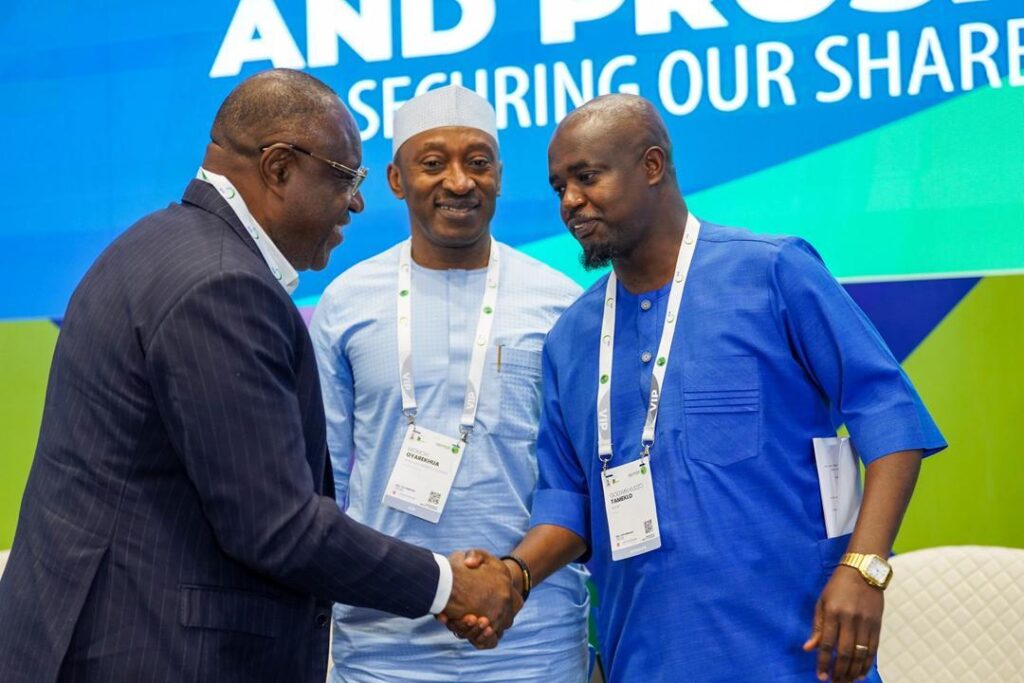
The Chief Executive of the National Petroleum Authority (NPA), Mr. Godwin Kudzo Tameklo (Esq.), has positioned Ghana as a model for disciplined petroleum regulation during the 2026 Nigeria International Energy Summit (NIES).
Speaking as a lead panelist at Africa’s premier energy forum, Mr. Tameklo underscored that the Authority’s firm oversight, fair pricing mechanisms, and consistent enforcement are the primary engines driving stability and investor confidence in Ghana’s downstream sector.

Participating in a high-level discussion themed “Driving Domestic Value: Transforming Downstream Markets and Refining,” Mr. Tameklo challenged the traditional view of regulation as mere control.
”Ghana’s experience shows that regulation must go beyond control and instead serve as a market-shaping tool,” he told an audience of global leaders and industry experts. “A stable regulatory environment gives investors the clarity they need while simultaneously ensuring fair pricing and product availability for the consumer.”
He drew a direct link between sound policy and tangible outcomes, highlighting how the NPA’s disciplined approach has:
Strengthened domestic refining capacity by creating a predictable investment climate.
Improved distribution efficiency through transparent frameworks.
Safeguarded supply security in an increasingly volatile global energy market.
The Push for “African Value”
The 2026 summit, held under the theme “Energy for Peace and Prosperity: Securing our Shared Future,” focused heavily on the urgent need for African nations to refine, utilize, and retain more of their petroleum value within their own borders.
Mr. Tameklo aligned with continental calls for increased domestic processing, arguing that strong regulatory institutions are the bedrock of sustainable industrialization. He noted that predictable rules are essential for attracting “responsible investment” that seeks long-term growth rather than short-term extraction.
A Regional Blueprint
The NPA’s contribution at the summit was widely seen as a blueprint for other African regulators. Delegates noted that Ghana’s ability to balance commercial viability with consumer protection has turned its downstream industry into a classroom for the sub-region.
”Our approach is anchored on consistency and transparency,” Tameklo added. “By ensuring that every player from the largest refiner to the smallest distributor operates under the same disciplined regimen, we create a market that works for everyone.”
The NIES 2026, endorsed by the Federal Government of Nigeria, continues to serve as a critical platform for strategic policy dialogue, bringing together the voices necessary to forge a unified African energy future.
