


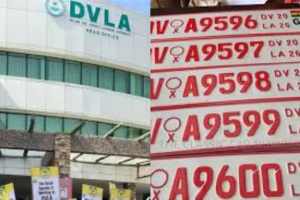
The Driver and Vehicle Licensing Authority (DVLA), in a major joint operation with National Security, has dismantled a sophisticated criminal syndicate responsible for the production and distribution of over 30,000 counterfeit Dealer Vehicle (DV) plates across the country.
The crackdown, which has led to the arrest of five suspects, comes as the Authority moves to aggressively tighten its vehicle registration systems to eliminate “goro boys” and restore the integrity of Ghana’s transport database.
The Takedown
The operation targeted key hubs in Lapaz, Narhman, Tarkwa, and Kumasi. According to a statement released by the DVLA on March 10, 2026, the syndicate is estimated to have defrauded the state of approximately GH¢12.5 million in revenue.
The Chief Executive Officer of the DVLA, Mr. Julius Neequaye Kotey, described the syndicate’s activities as a “criminal enterprise that threatens national security.” He revealed that the fake plates were often bundled with forged motor insurance certificates and counterfeit “Form D” and “Form E” logbooks to give them an appearance of authenticity.
“This is not merely a regulatory breach,” Mr. Kotey stated. “It is a coordinated effort to undermine law enforcement and deprive the state of legitimate revenue.”
The five suspects have been arraigned and are currently on remand, with their next court appearance scheduled for March 17, 2026. Security agencies are still pursuing two additional suspects identified as part of the intelligence chain.
Systemic Overhaul
The arrests coincide with the DVLA’s rollout of a major reform in vehicle registration. To combat the 5% of vehicles currently estimated to be operating with fake plates, the Authority is centralizing the production of number plates and introducing high-security features, including RFID (Radio Frequency Identification) chips.
Key measures being implemented to tighten the system include:
Centralized Embossment: To prevent unauthorized production, the DVLA is shifting toward a centralized model for embossing number plates, ensuring every plate is accounted for in a secure database.
New Digital Plates: Starting April 2026, all vehicles will begin a transition to new registration plates designed to improve traceability and prevent the reuse of plates from accident-damaged or “farm” vehicles.
Expansion of Services: In a bid to push “goro boys” out of business, the DVLA is opening 18 new offices nationwide—including five in the next two weeks—to bring legitimate services closer to the public.
Warning to Motorists
The DVLA has cautioned the public that using forged or duplicate plates is a criminal offense under Subregulation 11 of Regulation 23 of L.I. 2180. Motorists are urged to avoid middlemen and deal only with authorized DVLA officials at their regional and district offices.
“The plate is a security document,” Mr. Kotey emphasized. “We must be circumspect about who embosses them and for whom.”
The Authority has pledged to continue its collaboration with National Security to purge the system of fraudulent actors as it prepares for the full-scale implementation of the 2026 registration reforms.
