


By Adnan Adams Mohammed
The world economy stands at a precarious crossroads. While global growth has proven remarkably resilient through 2025, a new and volatile “oil price shock” sparked by the US-Israel-Iran conflict now threatens to derail the recovery.
In its latest March 2026 Global Economic Outlook (GEO), Fitch Ratings suggests that while steady growth is still possible, the margin for error has narrowed to a razor-thin edge.
Despite a barrage of geopolitical tensions and shifting US trade policies, the global economy closed 2024 with a growth rate of 2.7%, nearly touching its long-run average. This was fueled by:
AI Revolution: A massive surge in artificial intelligence-related investments;
Fiscal Stimulus: Significant deficit spending in both the US and China; and
US Consumption: Strong household spending bolstered by equity market gains.
Fitch has even revised its 2026 world growth forecast upward to 2.6% (from 2.4%), assuming the current spike in oil prices is “short-lived.”
The “Hormuz” factor: US$100 oil and beyond
The optimism of the forecast is currently being tested by the reality of the Strait of Hormuz. Following the outbreak of hostilities on February 28, the critical waterway which carries 20 million barrels of oil per day is effectively closed.
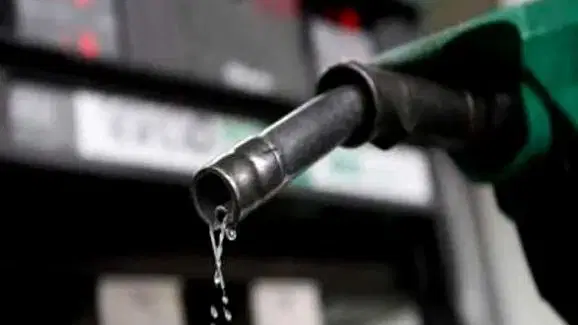
On Thursday last week, Brent crude surged over 9%, climbing back above the US$100-per-barrel mark to settle near US$99.44. This jump occurred despite the International Energy Agency (IEA) announcing a record-breaking release of 400 million barrels from strategic reserves.
“It is a sticking plaster on a much bigger problem,” says Bill Farren-Price of the Oxford Institute for Energy Studies. “We’re losing about 20 million barrels a day… 400 million is a lot, but in the context of a market that consumes 100 million a day, you can see the challenge.”
The worst-case scenario
Fitch warns that if oil prices hit US$100 a barrel and stay there, the global impact will be severe:
GDP Loss: World GDP would be slashed by 0.4% within a year.
Inflation Spike: Europe and the US could see inflation jump by 1.2 to 1.5 percentage points.
Interest Rate Reversal: In the UK and US, hopes for interest rate cuts are evaporating, with analysts now warning of potential rate rises to combat energy-driven inflation.
The fallout is already being felt on the ground.
China: Growth is forecast to slow to 4.3% as export growth cools.
The Philippines & Thailand: Long queues have formed at petrol stations, and governments have implemented four-day work weeks or “work from home” mandates to conserve fuel.
Eurozone: Higher energy prices are a “new headwind,” though fiscal easing in Germany offers a slight silver lining.
The outlook
The IEA’s emergency release the largest in history could add 4.4 million barrels per day to the market over the next three months. However, with Iran’s new Supreme Leader, Mojtaba Khamenei, vowing to keep the “lever” of the Strait of Hormuz closed, and the Revolutionary Guard warning of US$200-per-barrel oil, the “steady” growth predicted by Fitch remains under siege.
For now, the world watches the Gulf. If the disruption is brief, the global engine keeps humming. If it drags on, the “war shock” of 2026 could become a global recession.
