


By Adnan Adams Mohammed
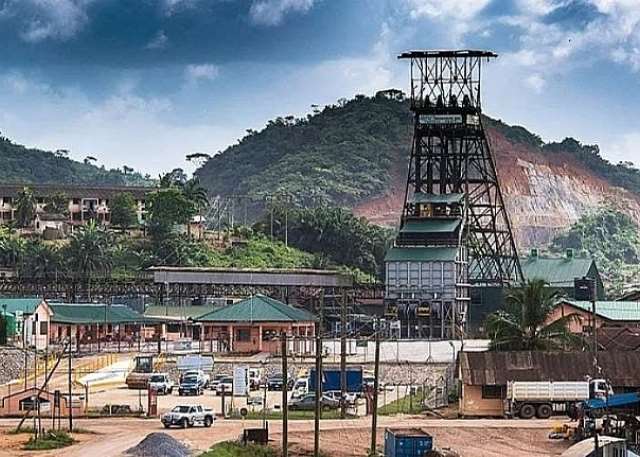
For the residents of Bogoso and Prestea, the roar of the gold mine is the heartbeat of the community. When that heartbeat faltered under previous management, the resulting silence was deafening.
As Heath Goldfields Limited moves to restart one of Ghana’s most strategic assets, the mine finds itself at the center of a tug-of-war between community agitation and state regulation.
The debate reached a fever pitch last week when Abdul-Moomin Gbana, General Secretary of the Ghana Mineworkers’ Union (GMWU), stepped forward to defend the “exhaustive” regulatory oversight that has governed Heath Goldfields’ takeover.
Addressing the rising tensions, Mr. Gbana was blunt: “I think it’s important to place on record that the concerned citizens of Bogoso and Prestea are not regulators.”
His comments are a direct response to the Coalition of Concerned Citizens-Bogoso Prestea, which recently petitioned the President for an independent probe.
The group alleges misrepresentation by Heath Goldfields and a “rushed” lease issuance process. But for the Union, the focus is on the rule of law.
“The Minerals Commission is the regulator,” Gbana stressed. “If the mine is not operating according to plan, they will call that mine to order.”
The Long Road to “Hitting the Ground Running”
The path to the current restart has been anything but smooth. After the termination of Future Global Resources’ (FGR) leases in late 2024, the mine was placed in a regulatory “operational region.”
Milestones:
Lease Awarded on December 13, 2024
Heath Goldfields takes legal control. Supreme Court Ruling on November 18, 2025
Final dismissal of challenges by previous owners (FGR/Blue Gold).
Operating Permit giving in December 2025
Minerals Commission gives technical clearance.
EPA Permit in January 2026. Environmental clearance secured.
With these hurdles cleared, the GMWU believes the era of excuses is over.
“Now that they have all the permits… I do not see why Heath Goldfields would have any excuse in hitting the ground running,” Gbana noted.
The GH¢136 million Question
At the heart of the community’s distrust is the “human cost” the legacy of unpaid salaries and severance packages inherited from past failures.
Heath Goldfields recently announced it had paid out GH¢136 million to settle these liabilities. While the Union has commended the company for “not reneging” on its Memorandum of Understanding (MoU), the Coalition of Concerned Citizens argues this is only a fraction of what is owed.
They claim that while some salary arrears were settled, critical components like SSNIT contributions, Tier 2 pensions, and severance pay for over 400 laid-off workers remain in limbo.
“The indebtedness was a legacy debt,” Gbana explained, defending the current operator’s commitment. “As far as I am concerned, if you take a visit to the mine, you will realize that what has to be done has been done.”
A High-Stakes Turnaround
As Heath Goldfields prepares for full-scale production, the stakes could not be higher. The government is betting on the company’s “technical expertise” and its alleged US$500 million investment line from Turkey’s Yıldırım Group to revitalize the mine.
The community remains watchful, their skepticism forged by years of “broken promises” from previous operators. For the Ghana Mineworkers’ Union, however, the priority is clear: the state has spoken, the permits are signed, and the time for talk has ended.
The heartbeat of Bogoso is ready to return but whether it will bring prosperity or further friction remains the golden question.
