


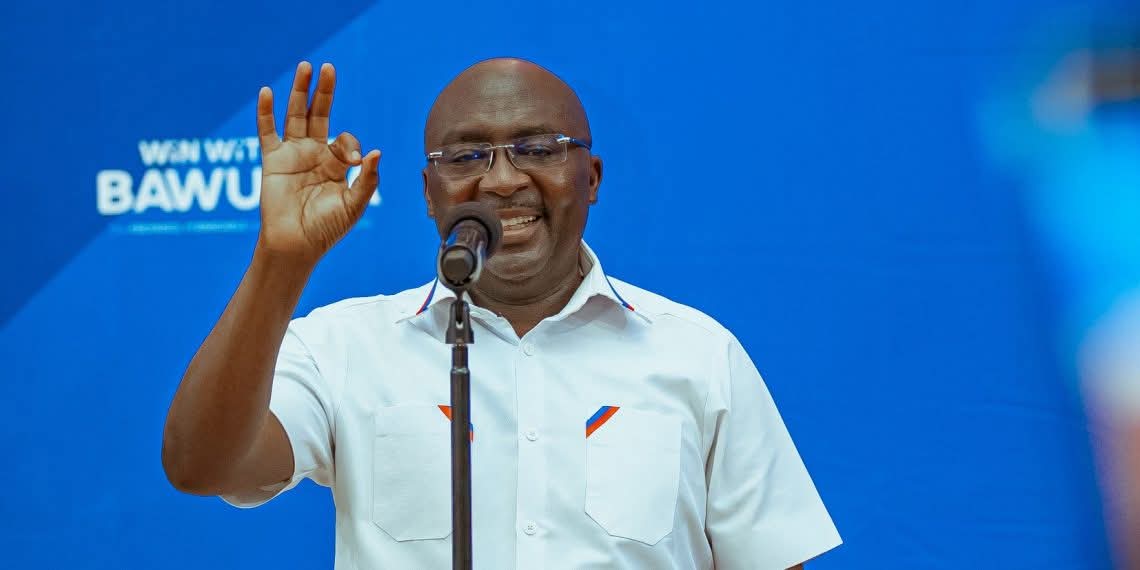
Former Vice President Dr. Mahamudu Bawumia has emerged as the clear frontrunner in the New Patriotic Party’s (NPP) 2026 presidential primaries, according to a sweeping new nationwide poll by Global Info Analytics.
The survey, conducted between December 29, 2025, and January 23, 2026, paints a decisive picture of the party’s internal dynamics. It places Bawumia well ahead of a crowded field, cementing his status as the early favorite to lead the NPP into the post-2024 era.
The Numbers: A Decisive Lead
Based on interviews with 10,133 respondents across 272 constituencies in all 16 regions, the poll’s predictive model gives Bawumia a significant cushion.
Candidate Support Percentage
Dr. Mahamudu Bawumia 57%
Kennedy Ohene Agyapong 28%
Dr. Bryan Acheampong 13%
Yaw Osei Adutwum 2%
Kwabena Agyepong 0%
According to Mussa Dankwa, Executive Director of Global Info Analytics, the survey used computer-assisted telephone interviews (CATI) to capture delegate sentiment nationwide, ensuring data from beyond just urban strongholds. The poll reports a 99.9% confidence level, with a margin of error of ±1.57%, adjusted to ±3.0% for the final model.
Acheampong Gains Momentum
One of the most striking findings from the January data is the late surge by Dr. Bryan Acheampong. Having languished in single digits in late 2025, his climb to 13% in the final week of the survey suggests his message is gaining traction among delegates seeking a “consensus” or “unifying” figure.
While still trailing the two frontrunners, pollsters indicate that Acheampong’s upward movement is the trend to watch as internal alignments shift in the final days before the January 31st vote.
Regional Fault Lines
Bawumia’s dominance is underpinned by a near-clean sweep of the five Northern regions, complemented by strong showings in the North East and Upper West a regional base that continues to prove decisive in internal NPP contests.
Conversely, Kennedy Agyapong maintains a tenacious hold on a segment of the grassroots, particularly in urban centers and parts of the Central Region, though he faces a steep uphill battle to close the 29-point gap.
“The data suggests that while the race has tightened in some southern pockets, the Vice President’s organizational advantage among the actual delegates remains his greatest asset,” noted Dankwa.
