


By Adnan Adams Mohammed
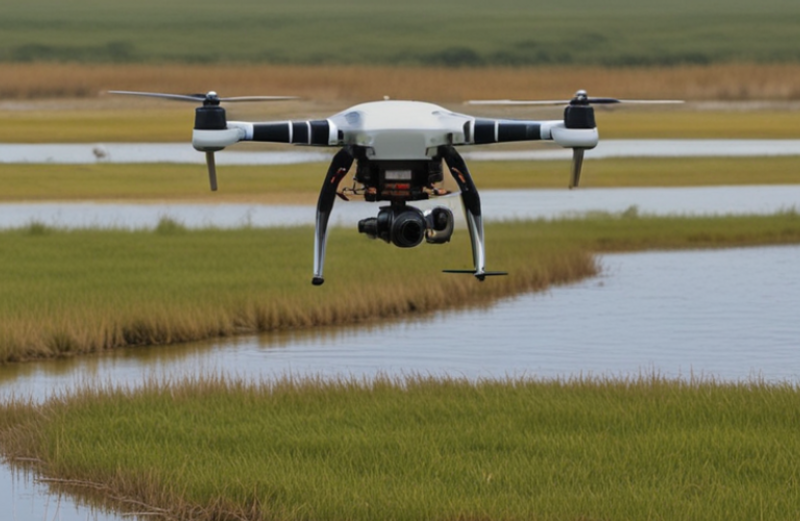
In the marshy outskirts of the Kwaebibirem District, a small, humming quadcopter rose above the thicket, signaling a historic shift in Africa’s longest-running war. This was not a military exercise, but a live demonstration of “Precision Larval Source Management (LSM)” the centerpiece of Ghana’s new high-tech offensive against malaria.
On February 10, 2026, delegates from 14 nations stepped out of the conference rooms of the Regional Workshop in Accra and into the field to witness the “Accra Reset” agenda in action. What they saw was a radical departure from traditional methods: Artificial Intelligence (AI) and aerial robotics doing the work that once took hundreds of manual man-hours.
The death of the “spray and pray” method
For decades, vector control relied on mass spraying and bed nets. However, the field visit demonstrated how the partnership between SORA Technology and the Noguchi Memorial Institute for Medical Research has turned the tide.
Using satellite imagery and AI-equipped drones, health officers are now able to map “fixed and findable” water bodies with surgical accuracy. During the demonstration, the drone identified breeding clusters that were invisible to the naked eye from the ground.
“We are moving from a broad-brush approach to precision warfare,” noted one of the technical leads during the field trip. “The AI tells us exactly where the larvae are. We don’t waste chemicals; we don’t waste time. We strike at the source before the mosquito even takes wing.”
Staggering efficiency: The data from the field
The pilot trials presented during the visit provided a startling economic justification for the tech pivot. The transition to AI-assisted LSM has delivered:
● 300% Increase in Site Detection: Drones identified three times more breeding sites than manual scouting teams.
● 50% Reduction in Larvicide: By targeting only active sites, the volume of chemicals used was cut in half.
● Drastic Cost Savings: While indoor residual spraying costs approximately US$6.70 per person, this tech-enabled LSM drops the cost to a mere US$0.24 per person.
Sovereignty through innovation
In a stirring keynote that set the tone for the field visit, Professor Dr. Grace Ayensu-Danquah, Deputy Minister of Health and MP for Essikado-Ketan, emphasized that this technology is the key to Ghana’s “health sovereignty.”
Representing the vision of President John Dramani Mahama, she declared that the “Accra Reset” is about moving Africa from being a consumer of aid to a creator of solutions. “Africa must no longer be the patient; it must be the architect of its own health destiny,” she told the gathered delegates.
Combatting the “urban invader”
The urgency of the demonstration was underscored by the recent arrival of Anopheles stephensi in Accra an invasive species that thrives in urban containers. Dr. Fiona Braka of the WHO noted that traditional methods are failing against such biological threats. The field trip proved that drones can navigate urban and rural landscapes with equal ease, offering a scalable solution for the 126 million Africans living in at-risk urban centers.
The US$127 billion prize
As the drones landed and the data was analyzed, the broader implications became clear. Beyond saving lives, eliminating malaria is projected to boost Africa’s GDP by US$127 billion.
By pioneering the Accra Compact, Ghana is ensuring that the tools of the future autonomous spray drones and predictive AI modeling are owned, operated, and scaled by Ghanaians, for Ghanaians.
As the workshop concluded, the message was clear: Ghana isn’t just fighting a disease; it is coding a malaria-free future into existence.
