


By Baraka Amidu
The Ghana Revenue Authority (GRA) has officially credited the ‘Publican’ AI system with a monumental breakthrough: the identification of GH¢11 billion in potential revenue leakages. This discovery marks one of the most significant wins for the state’s coffers in recent history, but the tool’s implementation has not been without its critics.
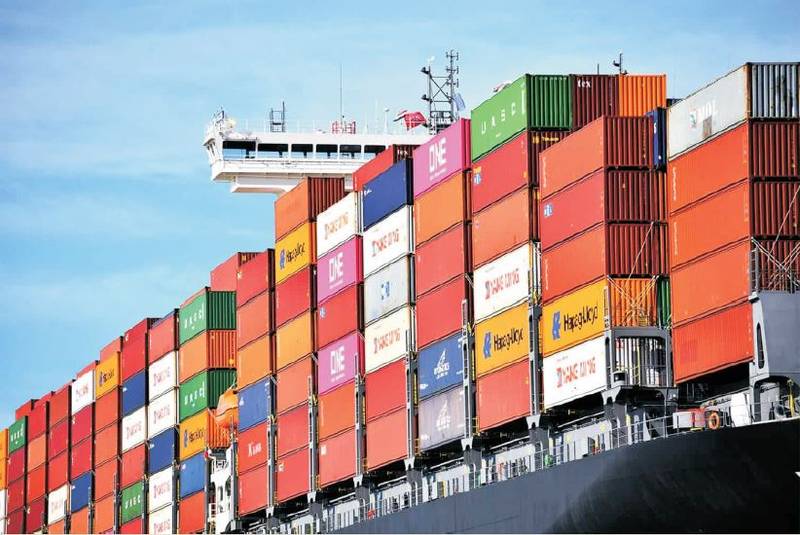
The scale of the “port leakages” exposed by Publican has sent shockwaves through the maritime and financial sectors. By analyzing vast datasets, including global market prices and shipping manifests, the AI revealed a massive gap between what was being declared at Ghana’s borders and the actual value of the goods.
According to the Commissioner-General of the GRA, Anthony Kwasi Sarpong, the AI didn’t just find errors; it exposed sophisticated under-invoicing and misclassification schemes that had previously evaded human detection.
Speeding up, not slowing down
Despite the revenue success, some stakeholders, including clearing agents and importers, have expressed anxiety that the new technology would create a “digital bottleneck,” adding hours or days to the clearance process.
The GRA leadership has moved swiftly to dismiss these fears. “The Publican AI system is speeding up trade, not slowing it down,” the GRA boss stated, explaining that the system acts as a “green-channel” facilitator. By instantly verifying documentation against international benchmarks, the AI allows honest traders to move through the ports faster than ever, while surgical precision is applied only to “high-risk” shipments.
The “human-in-the-loop” guarantee
A key point of contention has been whether a machine should have the power to dictate the taxes paid by businesses. The GRA has clarified that the AI is a “flagging” tool, not a “judge.”
“The system doesn’t determine values; it flags suspicious transactions,” the Commissioner-General emphasized. When the AI detects a discrepancy such as a shipment of electronics declared at a fraction of their market cost—it alerts human customs officers who then conduct the final assessment. This ensures that while the AI provides the data, human expertise still governs the final decision.
Ministry of finance weighs in
The rollout of Publican has also received a major vote of confidence from the Ministry of Finance. In the face of pushback from some industry players, the Ministry issued a robust defense of the technology, describing it as a “non-negotiable” step toward modernizing Ghana’s economy.
Ministry officials noted that the AI rollout is part of a broader strategy to digitize revenue collection and reduce human interference, which is often a breeding ground for corruption. They urged stakeholders to embrace the system, noting that the GH¢11 billion recovered is essential for the nation’s fiscal stability and infrastructure development.
A new standard for West Africa
As the GRA continues to integrate Publican into its daily operations, the message to the trading community is clear: transparency is the new currency.
While the debate between technological oversight and traditional trade practices continues, the results are hard to argue with. With GH¢11 billion back on the radar and a faster clearance process for compliant businesses, the GRA is betting that this digital sentry will define the future of Ghanaian trade for decades to come.
