


By Adnan Adams Mohammed
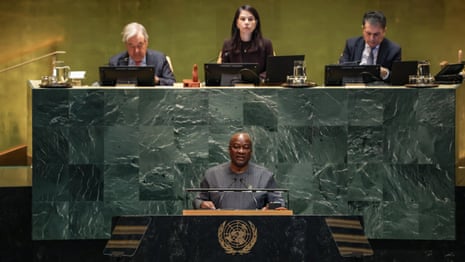
In a move described as a watershed moment for international justice, the United Nations General Assembly has officially adopted a groundbreaking resolution declaring the transatlantic slave trade and chattel slavery as crimes against humanity.
The resolution, spearheaded by Ghana and supported by a coalition of African and Caribbean nations, not only codifies the historical atrocities into the framework of international law but also issues a formal demand for a global reparations framework to address the systemic inequalities left in the wake of centuries of exploitation.
A Victory for African Diplomacy
The passage of the resolution marks a significant diplomatic triumph for Ghana.
Speaking shortly after the vote, Ghana’s representatives at the UN emphasized that the resolution is not merely about acknowledging the past, but about correcting a historical injustice that continues to stall the development of African nations and the African diaspora.
The resolution calls on former colonial powers and participating nations to engage in meaningful dialogue regarding reparations which could include financial compensation, debt cancellation, the return of looted cultural artifacts, and targeted developmental support.
‘An Emphatic Victory for Justice’ – Samuel Okudzeto Ablakwa
The news has been met with widespread acclaim within Ghana. Samuel Okudzeto Ablakwa, Member of Parliament for North Tongu and a vocal advocate for social justice, hailed the resolution as an “emphatic victory” for the continent.
”This is the culmination of generations of struggle,” Ablakwa stated. “For too long, the world treated the slave trade as a closed chapter of history rather than a continuous crime that built the wealth of the West at the expense of African lives. This resolution validates our demand for accountability and ensures that the call for reparations is no longer a fringe request, but an international mandate.”
Ablakwa further noted that the “Ghana-led” nature of the resolution reinforces the country’s position as a beacon of Pan-Africanism and a leader in the global fight for Black liberation.
Amnesty International Calls it a ‘Momentous Step Forward’
Human rights organizations have also weighed in, with Amnesty International describing the move as a “momentous step forward” for global human rights.
In a statement released shortly after the announcement, Amnesty International praised the UN’s decision to finally align international law with the lived realities of millions. The organization noted that the resolution provides a legal and moral foundation for victims of systemic racism and economic marginalization to seek redress.
”The recognition of slavery as a crime against humanity is long overdue,” the statement read. “This resolution creates a critical opening for reparations, which are essential for healing the deep-seated wounds of the past and dismantling the structures of racism that persist today.”
The Path Ahead
While the resolution is a significant symbolic and legal milestone, experts warn that the road to actual reparations will be complex. Several Western nations, while supporting the acknowledgment of historical wrongs, have expressed reservations regarding the legal binding of financial reparations.
However, for the sponsors of the resolution and the millions across the African diaspora, the UN’s declaration represents a point of no return. The conversation has shifted from “if” reparations are owed to “how” they will be delivered, marking a new era in the global pursuit of racial and economic justice.
