


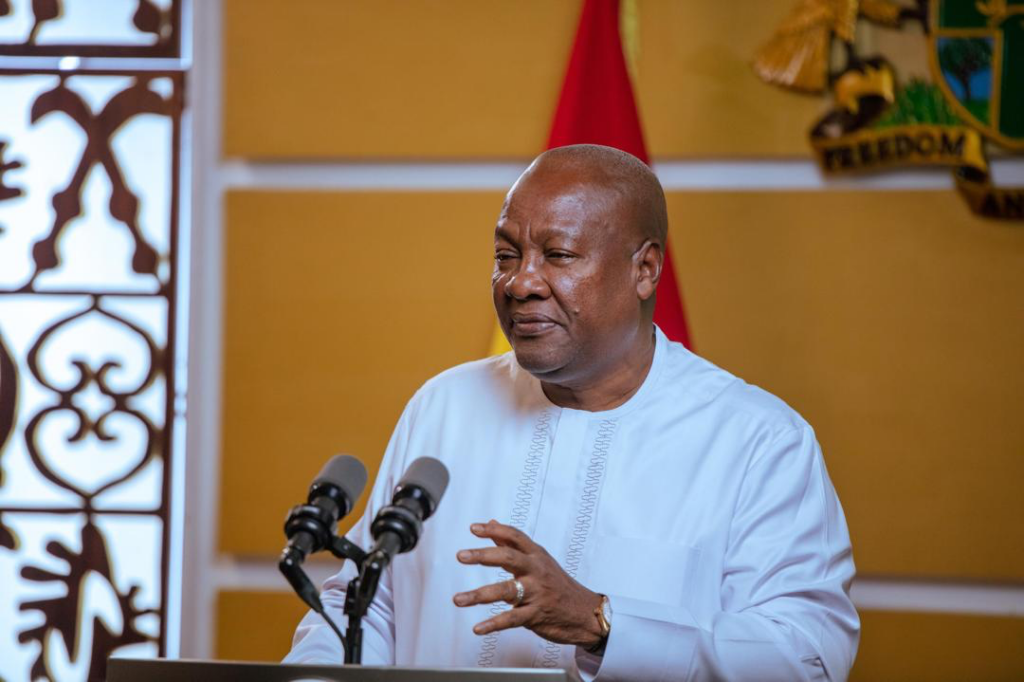
As the International Monetary Fund (IMF) urges caution regarding Ghana’s return to the international bond market, President John Dramani Mahama is exuding confidence in the nation’s economic trajectory, outlining an ambitious roadmap for accelerated growth and expansion throughout 2026.
The divergence in tone highlights a delicate balance between leveraging recent economic stability, bolstered by strong domestic investor sentiment and a rallying cedi, and heeding international advice to manage future fiscal risks carefully.
The IMF’s Measured Warning
Ghana’s government has signaled its intention to resume the issuance of treasury bonds in early 2026, a strategic move aimed at lengthening the average maturity of its debt and easing rollover risks following the 2023 domestic debt restructuring.
However, the IMF, in recent advice to the government, has counselled a gradual and cautious approach. The international body points to a narrowing spread between bond yields and the central bank’s monetary policy rate. Furthermore, while the secondary bond market advanced strongly last week, the primary market for government paper has seen a receded appetite in recent auctions, a factor the IMF believes warrants prudence.
Since the debt restructuring, treasury bills have been the primary source of budget financing. The IMF’s advice underscores a need to ensure sustainable market appetite before fully committing to larger bond issuances.
Investor Confidence Remains High in T-Bills
Despite the caution surrounding the long-term bond market, investor sentiment in short-term instruments remains robust. Data from the Bank of Ghana for the week of December 29, 2025, shows that Treasury bills were oversubscribed by 18.48%.
Investors submitted total bids of GH¢3.91 billion, exceeding the Treasury’s target of GH¢3.30 billion. This strong demand, particularly for the 91-day bill, reflects a rebound in bank participation and suggests a high degree of confidence in the government’s short-term fiscal management. Interest rates edged up slightly across all maturities, indicating sustained market appetite.
President Mahama Charts a Confident 2026 Roadmap
In his New Year Message to the Nation on January 1, 2026, President Mahama focused squarely on expansion and delivery, signaling that the government is confident enough in its 2025 gains to accelerate reforms.
The President outlined a broad agenda aimed at transforming key sectors:
Social Services: Operationalizing Universal Health Coverage through the Free Primary Health Care Programme and continuing the digitalisation of schools.
Agriculture and Energy: Transforming farming into a commercially viable sector and working towards a 30% share of renewable energy in the national mix to reduce costs.
Governance: Intensifying the fight against corruption with “no sacred cows” and implementing recommendations of the Constitutional Review Committee.
“The gains made in 2025 provide a foundation for building the Ghana that citizens desire,” the President stated, projecting a sense of certainty and control over the nation’s economic future that appears to contrast with the IMF’s more measured risk assessment.
As Ghana navigates its recovery, the government faces the challenge of balancing its ambitious growth agenda and confidence in its own policies with the cautious, risk-averse guidance of its international partners.
By Adnan Adams Mohammed
