


By Adnan Adams Mohammed
The global economy is effectively financing its own demise, according to a staggering new report by the United Nations Environment Programme (UNEP).
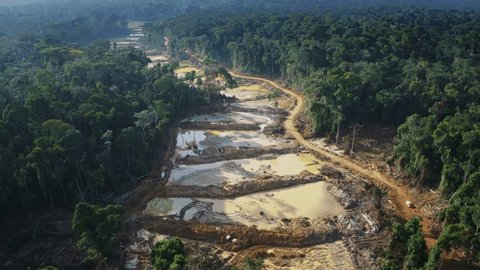
Published two days ago, the State of Finance for Nature 2026 reveals a profound financial imbalance: for every one US dollar currently invested in protecting and restoring the natural world, thirty US dollars are spent on activities that actively destroy it.
This 30:1 ratio is not just an environmental statistic; it is a “red alert” for global economic stability. The report highlights that the $7.3 trillion currently flowing into nature-negative activities is more than just a cost it is a debt being levied against the future of the planet.
The Balance Sheet of Destruction
In 2023, global spending on activities that harm nature reached an estimated US$7.3 trillion. This figure, equivalent to roughly 7% of global GDP, is fueled by two primary engines:
● Private Sector Capital ($4.9 Trillion): Highly concentrated in “real economy” sectors, including energy, utilities, industrial production, and basic materials (such as chemicals and mining).
● Government Subsidies ($2.4 Trillion): Public funds continue to prop up environmentally harmful practices in agriculture, fossil fuels, water management, transport, and construction.
In sharp contrast, total investment in Nature-based Solutions (NbS) actions that protect or restore ecosystems to address climate and social challenges stood at a mere US$220 billion.
The Private Sector’s “Feasibility Gap”
Perhaps the most alarming finding is the lack of private sector engagement in nature’s recovery. While businesses are the primary drivers of nature-negative spending, they contribute only 10% (US$23.4 billion) of the total funding for nature-based solutions.
“If you follow the money, you see the size of the challenge ahead of us,” said Inger Andersen, Executive Director of UNEP.
“We can either invest in nature’s destruction or power its recovery there is no middle ground. While financing nature-based solutions crawls forward, harmful investments and subsidies are surging ahead.”
Experts note that many nature-positive projects are “dying in the feasibility gap”—failing to secure the early-stage seed funding or de-risking capital needed to prove long-term commercial viability.
The “X-Curve” Roadmap to 2030
To bridge this gap, UNEP has introduced the Nature Transition X-Curve. This framework provides a strategic “flight path” for leaders to simultaneously phase out destructive “business-as-usual” practices while scaling up high-integrity nature-positive investments.
To meet global targets for climate, biodiversity, and land restoration, NbS investment must increase 2.5 times to reach US$571 billion per year by 2030. While this sounds daunting, the report emphasizes that this amount represents just 0.5% of global GDP.
Real-World Solutions: More Than Just Planting Trees
The report moves beyond warnings to showcase how a nature-positive economy is already taking shape:
● Resilient Infrastructure: Integrating nature into road and energy projects to reduce disaster risk.
● Urban Greening: Cooling “concrete jungle” cities to combat extreme heatwaves.
● Carbon-Negative Building: Developing construction materials that store $CO_2$ rather than emitting it.
Germany’s Minister for Economic Cooperation and Development, H.E. Reem Alabali-Radovan, stressed that valuing natural capital is the only way to “future-proof” the global economy. “The private sector plays a key role… nature can be included in major economic and policy decisions,” she noted.
The Bottom Line
The UNEP report makes it clear: the “Big Nature Turnaround” is not an act of charity; it is a maintenance bill for the natural infrastructure that underpins $58 trillion of the global economy. As the world moves toward 2030, the choice is binary continue funding nature’s decline or pivot toward its trillion-dollar recovery.
